Emergency Roof Tarping & Severe Storm Envelope Securing in Tacoma, WA
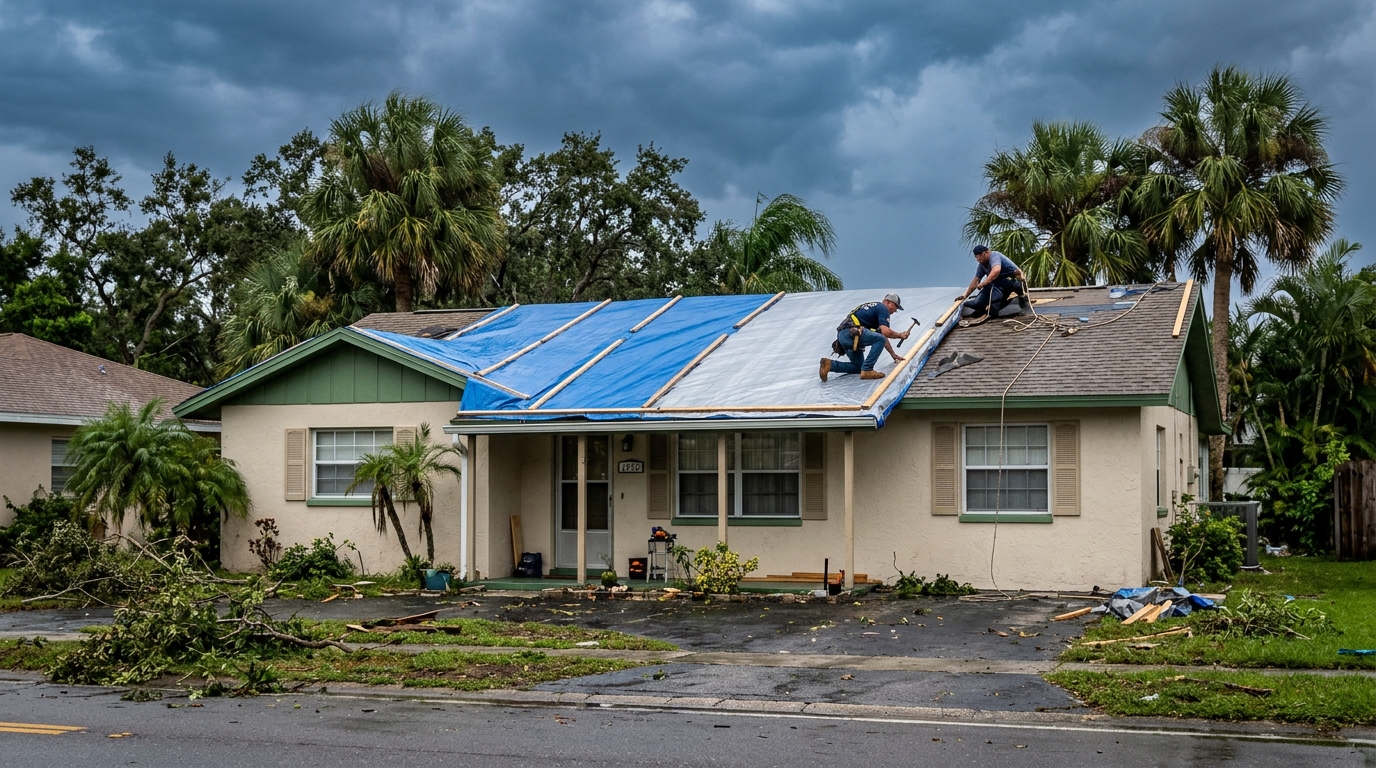
When severe Pacific storms funnel through the Tacoma Narrows or violent wind gusts uproot Douglas fir limbs into residential roofs, immediate physical stabilization is the only barrier protecting your home from catastrophic water destruction. Unchecked rainwater rapidly saturates attic insulation, weakens ceiling joists, and ruins hardwood floors and furnishings. Roof Expert USA dispatches rapid emergency tarping teams across Tacoma, Lakewood, Puyallup, and Gig Harbor, installing heavy-duty commercial membranes engineered to withstand sustained South Sound gale winds.
Regional Microclimate Dynamics & Severe Storm Exposure in South Sound
The South Sound region experiences violent winter storm fronts characterized by abrupt barometric drops, intense squalls, and wind gusts frequently exceeding 50 to 65 mph. The Puget Sound convergence zone and Commencement Bay funneling effect amplify wind shear across exposed ridges and waterfront hillsides in University Place, Old Town, and Browns Point. Roofing systems subjected to these aerodynamic forces suffer torn or stripped shingle fields, crushed ridge vents, and impact holes from heavy timber debris. Dispatched crews specialize in rapid perimeter stabilization to arrest storm ingress.
Non-Destructive Moisture Diagnostics & FLIR Thermal Tracing
Assessing a breached roof envelope during storm conditions demands rigorous structural safety protocols. Dispatched specialists conduct comprehensive ground-level and ladder-perimeter evaluations before mounting the roof deck, verifying that rafter integrity has not been compromised by fallen tree limbs or heavy impact loads. Technicians utilize FLIR thermal cameras to map water pooling under damaged sheathing and identify potential structural collapse hazards before placing equipment or stepping onto wet, moss-covered slopes.
Key Technical Engineering Protocols • South Sound Standards
- Heavy-Duty 12-Mil UV-Resistant Reinforced Polyethylene Membranes engineered for sustained coastal winds.
- 2x2 Batten Mechanical Rafter Anchoring engineered to withstand 60+ mph South Sound wind gusts.
- Over-the-Ridge Continuous Wrapping to prevent hydrostatic wind uplift and driving rain penetration.
- Complete Photographic & Engineering Documentation for expedited insurance claim processing.
Step-by-Step Substrate Restoration Methodology
Professional emergency tarping requires mechanical engineering, not temporary sandbags or loose bricks. Technicians deploy commercial-grade 12-mil UV-resistant, woven polyethylene tarps. The membrane is stretched taut over the entire damaged area, wrapped securely over the roof ridge to eliminate wind-tunneling under the top edge, and mechanically fastened using 2x2 wood batten strips secured with 3-inch ring-shank nails or screws directly into structural trusses. Batten edges are sealed with elastomeric butyl tape along rakes to prevent gale-force updrafts from tearing the tarp free.
Washington State Energy Codes & Contractor Licensing Compliance
All dispatched emergency tarping crews are registered with the Washington State Department of Labor & Industries (L&I) and adhere strictly to Washington DOSH (WAC Chapter 296-155) fall protection standards. Technicians operate with full-body harnesses, rope grabs, and certified roof anchor brackets rated for 5,000 lbs of tensile pull. Complete photographic documentation of the initial damage, fallen timber, structural breaches, and completed tarp installation is prepared in insurance-standard Xactimate format to support homeowner claims.
Preventative Property Maintenance & South Sound Storm Preparedness
Property owners facing storm emergencies should immediately contact their insurance carrier to open a claim, as most policies cover emergency mitigation costs necessary to protect the property from secondary water ruin. Homeowners should avoid climbing onto damaged, wet roofs, as wet shingles and moss create extreme slip hazards. Regularly inspect overhanging tree branches within 10 feet of the roofline and have certified arborists trim compromised limbs before winter storm season.
Emergency Homeowner Safety Protocol During Active Roof Breaches
Never attempt to access a wet, moss-covered roof or erect aluminum ladders near overhead electrical lines during rain or wind conditions in Pierce County. If water is dripping near ceiling light fixtures or electrical panel enclosures, immediately switch off the circuit breaker for that zone at your main electrical service panel. Place buckets to catch drips, puncture small pinholes in sagging sheetrock blisters to relieve pooled water weight safely, and call our emergency dispatch desk immediately at (888) 208-4155.
Frequently Asked Questions About Emergency Roof Tarping
How long can an emergency roof tarp stay in place on a Tacoma home?
A professionally installed 12-mil commercial tarp anchored with rafter-screwed 2x2 battens is engineered to protect against harsh Pacific Northwest rain and wind for up to 60 to 90 days, giving homeowners ample time to negotiate insurance estimates and schedule permanent construction.
Will tarping my roof cause more damage to good shingles?
No. Professional crews roll the tarp perimeter into wooden battens and anchor directly into structural framing or utilize non-penetrating sandbag counter-weights on low pitches, avoiding blind nailing into good shingles that would cause new leak points.
What if a large tree branch is still stuck through the roof?
Do not attempt to move the branch yourself. Call our dispatch desk immediately. We coordinate with contractors who work alongside certified crane tree removal specialists to lift limbs safely before tarping begins.
Immediate Emergency Roof Dispatch in Tacoma
Speak directly with on-call South Sound dispatchers. Independent, licensed Washington roofing contractors standing by 24 hours a day, 7 days a week.
DISPATCH HOTLINE: (888) 208-4155